If you are mainly used to playing chess online you may be a little unsure about playing with real three-dimensional pieces and a real three-dimensional person sitting on the other side of the board.
The obvious differences are all to do with the physical rather than electronic format. Online, you may have been playing fairly quick chess with the software clock timing your game. Over the board you can also play quickly but there is a greater chance of being injured by a flying piece! Clocks and indeed the official laws of chess are all optional in friendly games but players who want to be super polite and follow the etiquette of chess should know that:
- It’s sporting to shake hands before and after a game
- Decide your move before touching a piece
- When you make a move, do so with one hand and (if using a clock) use that hand to stop your clock
- There is no requirement to say ‘check’
- If you intend to promote a pawn, make sure you have the promotion piece available beforehand (some sets have extra queens)
- If castling, move the king first and the rook second
- If you want to adjust your pieces, do so only when it is your turn to move and your opponent agrees to that in advance
- If you want to offer a draw, make your move on the board then offer a draw (and stop your clock)
- A resignation can be made at any time, but it should be clear and distinct from a draw offer
- If your opponent makes an illegal move: pause the game rather than making any move yourself – the next action depends on the rules for the competition but generally it is not an immediate loss of game
If you would like to read more, ColCHESSter recommends ‘Over-the-board chess for online players’ by Andrew Medworth, the Hendon Chess Club captain. It is based on his experience of playing ‘seriously’ in chess club matches and tournaments. It can be read at https://www.hendonchessclub.com/news/2021-22/otb-players-guide/
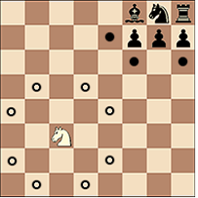
The FIDE Laws of Chess taking effect from 1 January 2023 may be viewed at https://handbook.fide.com/chapter/E012023 They are very clear and include diagrams. For example this explanation of how knights move is concise: